Book Details
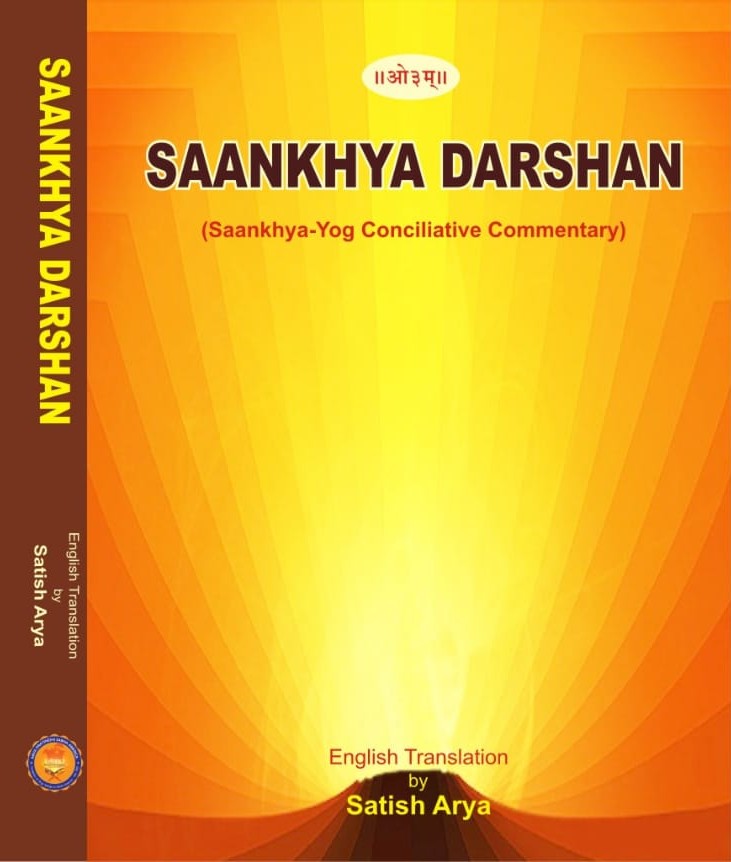
Description
Sankhya philosophy explains the theoretical aspect of attaining salvation, i.e., it describes the attainment of discrimination as the only way to salvation; and Yoga philosophy explains the practical aspect of attaining that discrimination = discriminative knowledge of the Soul, and Matter. Therefore, both philosophies are not only complementary to each other but together they present the complete path of salvation for the devotee. The features of this commentary are as follows:—
1. Word-by-word translation of Sankhya aphorisms.
2. Presentation of the meanings given by Maharishi Dayanand Saraswati in his books on the aphorisms, along with the respective aphorisms. The meanings given by Swami Dayanand in Satyarth Prakash and Rigvedadibhashyabhumika on 19 aphorisms have been given.
3. An explanation in the English language called "Vedic Commentary" in accordance with the inner testimonies of Maharishi Kapil's opinion on the Aphorisms. In the explanation of 85 aphorisms, internal evidence or reference of Sankhya Aphorisms has been given.
4. 184 evidences of Yoga Darshan and Vyasa Commentary on 119 aphorisms are given, which are very helpful in understanding the coordination of Sankhya and Yoga Darshan.
5. In “Vedic Commentary”, at necessary places, the topics explained in the Aphorisms have been presented with the evidence of Vedas and Vedic scriptures. On 278 Sutras, 84 evidence have been presented from Vedas, 184 from Yoga Darshan, 32 from other Vedic Philosophies, 130 from Upanishads, 13 from Mahabharata, 13 from Manusmriti, and 30 evidences from other texts.
6. The stories given in the fourth chapter have been presented with evidence from Mahabharata.
7. Rational explanation of the so-called 75 interpolated aphorisms by various commentators, in accordance with the principles of Vedic scriptures, and clarification of their real meaning.
8. In the presented “Vedic Commentary”, authentic and rational explanation in accordance with the true principles propounded in the Vedas and Vedic Scriptures.
Thus, this is the only commentary that not only clarifies the real principles of Seer Kapil but is also in accordance with the principles of various ancient sages of the Vedic age.